What to Expect from a Professional PPF Installation in Huntington Beach, CA
Getting a professional PPF installation is one of the most effective ways to protect your vehicle's paint from the coastal conditions that accelerate wear along this stretch of Orange County. This guide walks you through every stage of the process, from your vehicle's first inspection to the care routine that keeps the film performing for years. Whether you are considering partial or full coverage, knowing what professional PPF installation involves helps you make a confident, informed decision.
Why Vehicles Need PPF More Than Most
Huntington Beach drivers face environmental pressures that inland areas rarely see at the same intensity. Salt air deposits corrosive residue on exposed paint with every coastal trip. Year-round Southern California UV oxidizes clear coat faster than in non-coastal climates. Sandy roads near Bolsa Chica State Beach create constant abrasion, and vehicles parked near the shore accumulate sea spray and airborne contaminants between washes. PPF installation in Huntington Beach addresses all of these stressors with a single protective layer that acts as a sacrificial barrier, so your factory paint takes none of the punishment.
What Happens During a Professional PPF Installation
A professional PPF installation follows a structured process. Each stage matters, and skipping any step can compromise how well the film adheres and how long it lasts.
Paint Inspection and Condition Assessment
Every professional install begins with a thorough inspection of the vehicle's paint. The technician looks for existing rock chips, scratches, swirl marks, and surface contamination. This step determines whether paint correction is necessary before the film goes on. Applying film over unaddressed defects can lock imperfections in place and make them more visible under the film's clarity. Any swirl marks or light scratches are addressed at this stage so the film bonds to a clean, corrected surface.
Surface Decontamination
Once inspection is complete, the vehicle goes through a thorough decontamination wash that removes bonded iron deposits, road tar, industrial fallout, and any wax or sealant residue. These contaminants prevent the film's adhesive from bonding properly, which can cause lifting or edge peeling over time. Decontamination is one of the steps that separates a professional installation from a rushed one.
Film Cutting and Pattern Fitting
Professional installers use vehicle-specific digital cutting patterns rather than cutting freehand near painted surfaces. This produces seamless edges that follow exact body lines and eliminates the risk of blade marks on your paint. For Huntington Beach drivers choosing between partial and full coverage, this is where the scope of the job becomes clear. Partial kits typically cover the front bumper, hood, fenders, mirrors, and door edges. Full-body coverage extends protection to every painted panel.
Film Application
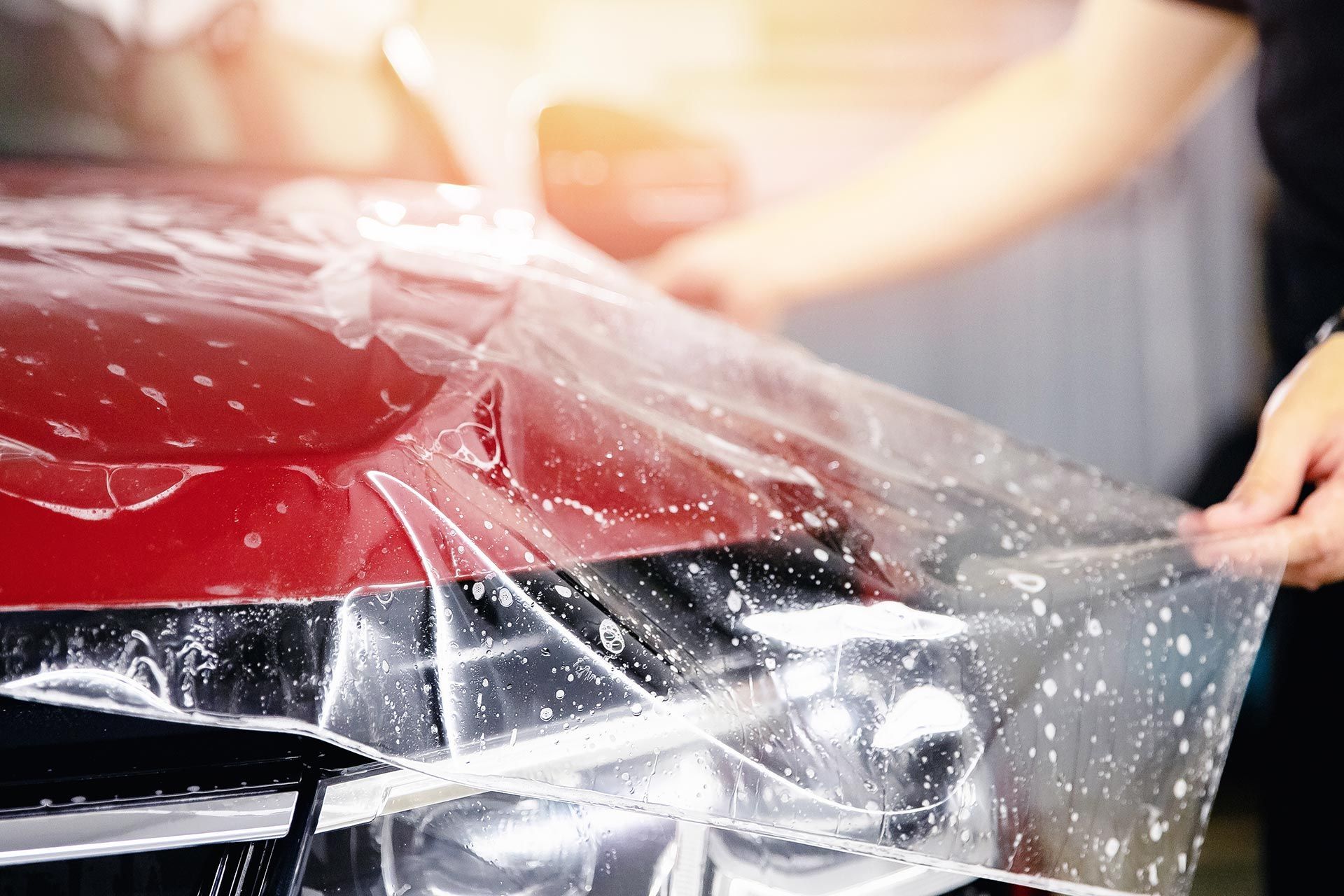
The film is applied in a controlled environment to prevent dust and debris from getting trapped beneath it. The installer works section by section, using a slip solution to position the film precisely before it bonds. Edges are tucked or wrapped around panel edges to resist lifting. XPEL PPF uses edge seal technology to help the film stay adhered at the borders where lifting most often begins.
Cure Time and Final Inspection
After application, the film needs time to fully bond to the surface. Small water pockets beneath the film are normal and typically clear within a few days. A professional installer will walk you through what to expect and what to avoid during this window. The vehicle goes through a final inspection before being returned, checking for any areas that need attention.
Partial vs. Full Coverage: Which Is Right for Your Vehicle?
Partial front-end packages protect the areas that absorb the most road debris, making them a practical starting point for many drivers. Full-body coverage makes sense for vehicles driven frequently on the freeway, used for longer commutes on the 405 or Pacific Coast Highway, or for owners who want complete paint preservation. You can learn more on the PPF service page.
A conversation with your installer about your driving habits will help determine which option delivers the best long-term value.
How to Care for Your PPF After Installation
PPF is low-maintenance, but a few habits extend its life significantly:
- Avoid washing the vehicle for at least the first few days after installation to allow the film to cure fully.
- Use pH-neutral soaps and avoid abrasive polishes or stiff brushes that can scuff the film's surface.
- Rinse regularly to remove salt air residue, especially after driving near the coast or beach parking areas.
- Avoid high-pressure washing aimed directly at film edges, which can cause lifting over time.
- Consider adding a ceramic coating over the PPF for added gloss, easier cleaning, and hydrophobic protection.
XPEL PPF includes a self-healing topcoat that erases light surface scratches when exposed to heat from sunlight, a practical feature in Southern California's year-round sun.
What Does a PPF Warranty Cover?
XPEL PPF is backed by a 10-year warranty covering yellowing, cracking, peeling, and delamination under normal use conditions. This is meaningful protection for Huntington Beach vehicle owners given the elevated UV exposure and salt air environment along the Orange County coast. Always confirm warranty details with your installer before the job begins.
Ready to Protect Your Vehicle Serving Huntington Beach, CA?
Signature Glass Tinting, serving Huntington Beach, CA, and the surrounding Orange County area, brings over 30 years of expertise to every PPF installation. Our team uses XPEL premium film and follows a detail-driven process on every vehicle we work on, backed by competitive pricing, a 100% satisfaction guarantee, and reliable warranty coverage. Contact us to find the right coverage for your vehicle. Check our Google Profile to read what hundreds of Orange County drivers are saying about their experience with us.





